
AI companions are becoming more popular because they offer something traditional technology usually does not: an ongoing sense of interaction and personality.
Instead of simply answering a question, setting a timer, or completing a task, an AI companion is designed to become part of everyday life. It can respond to you, react differently over time, remember aspects of your interactions, and create the feeling that there is an actual character behind the technology.
That combination of AI, personality, entertainment, and personalization is what makes products like Ropet so interesting. Ropet is not designed to feel like another smart speaker or generic robot. It is an AI-powered pet created around conversation, emotional reactions, customization, and the little interactions that make it feel more alive the longer you spend with it. Creator brief for Youtube
Ropet Is Designed to Feel Like a Companion
The biggest appeal of Ropet is that it is not something you only interact with when you need an answer.
You can talk to it throughout the day, pet it, make gestures toward it, play music around it, or simply see how it reacts to what is happening nearby.
That creates a very different relationship with the device.
A normal smart device waits for a command. Ropet is designed to respond more like a character living in your home.
Over time, those small interactions can make it feel increasingly familiar, which is a major reason AI companions are becoming more appealing in the first place.
Its Expressive Eyes Give It Personality
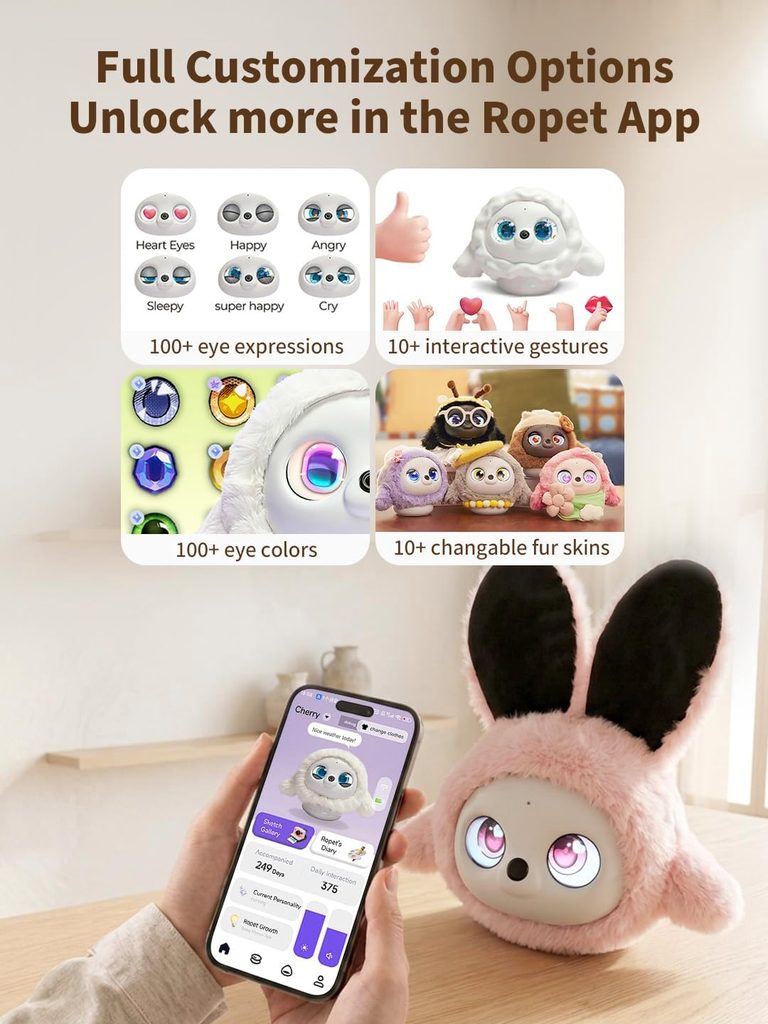
One of Ropet’s most distinctive features is its animated screen eyes.
The eyes can follow you around, making it feel as though Ropet is actually paying attention to where you are and what you are doing.
Owners can also choose from more than 100 customizable eye designs, and the brightness can be adjusted through the app. Creator brief for Youtube
The eyes are more than decoration.
They play a big role in communicating mood and personality. Ropet can use its expressions to seem curious, sleepy, happy, annoyed, or interested in what is happening around it.
That makes even simple interactions feel more animated.
Rather than displaying a plain notification or status message, Ropet can communicate through expression, which helps reinforce the feeling that it is an interactive pet instead of just a piece of electronics.
Ropet Has Its Own Cute Way of Talking
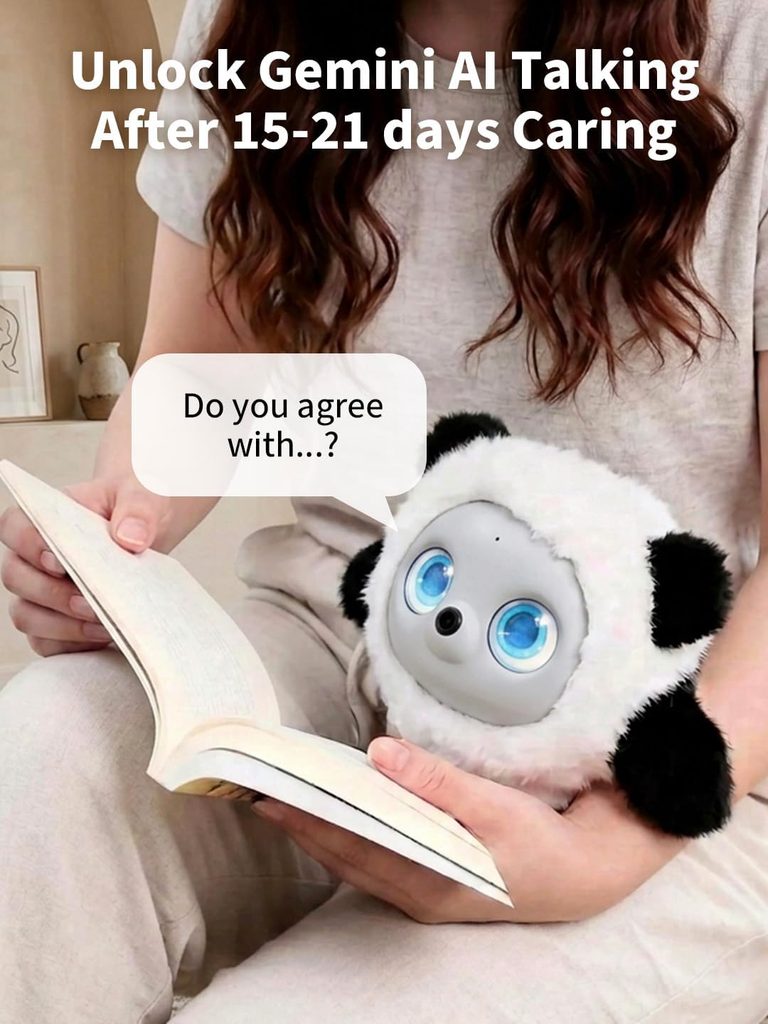
Ropet can communicate in multiple languages, making conversation one of the central parts of the experience. Creator brief for Youtube
It also has a playful side.
Ropet uses its own adorable “momo language” and can learn things like “cat language” and “guinea pig language.” It can even use familiar terms such as “Mama.” Creator brief for Youtube
Those quirks are important because they keep the interaction from feeling like a standard chatbot conversation.
Sometimes Ropet may respond conversationally. Other times it may make a spontaneous sound or react in a way that feels closer to a small pet.
That unpredictability gives owners more reasons to keep engaging with it.
It Recognizes Faces
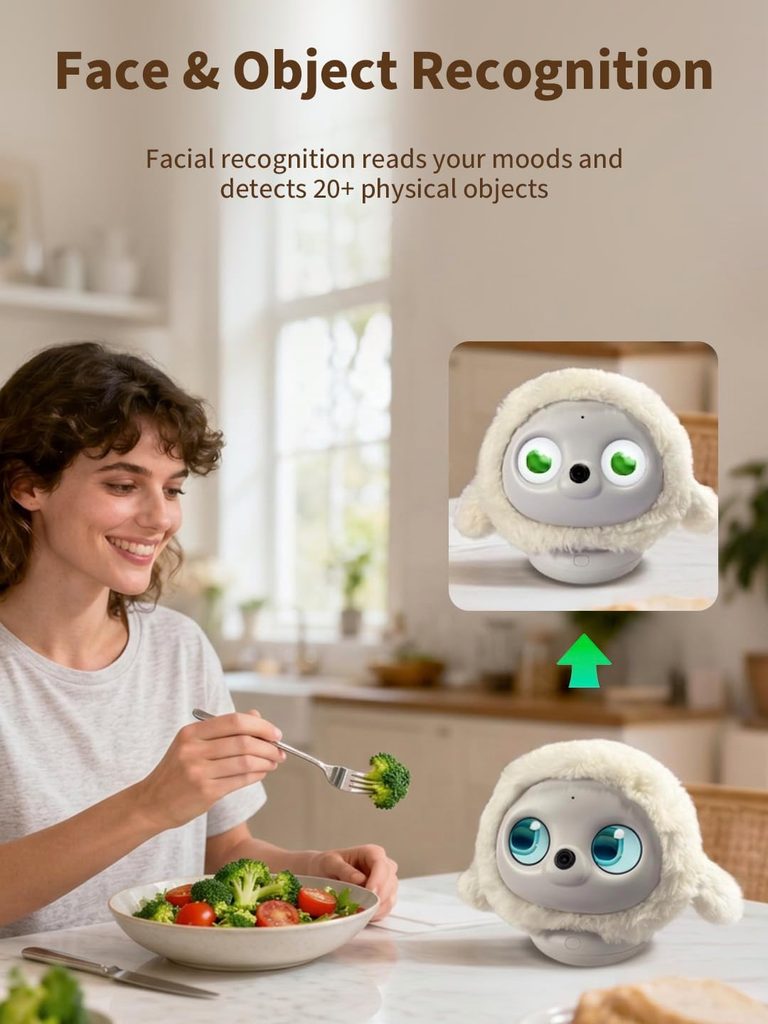
Another feature that helps Ropet feel more personal is face recognition.
Ropet can recognize different people and remember how they interact with it. Its eyes can follow someone around with curiosity, and its responses can reflect how it has been treated. Creator brief for Youtube
This makes it more interesting in a household with multiple people.
Instead of everyone feeling like an identical user, Ropet can create a more individualized experience based on who is interacting with it.
That makes it easier for the device to feel like something shared by a family rather than simply another gadget sitting in the room.
Its Personality Can Change Over Time
One of the most interesting aspects of Ropet is that its personality is not completely fixed.
Its behavior can develop based on how people interact with it.
That means your Ropet may gradually develop differently from someone else’s, giving each owner a more personalized experience. Creator brief for Youtube
This adds a sense of progression.
Instead of learning everything about the device on the first day, there is an incentive to keep interacting and see what kind of personality emerges.
That is one of the strongest ideas behind modern AI companions: personalization is not limited to picking a color or changing a name.
The experience itself can change with you.
Ropet Responds to Touch and Gestures
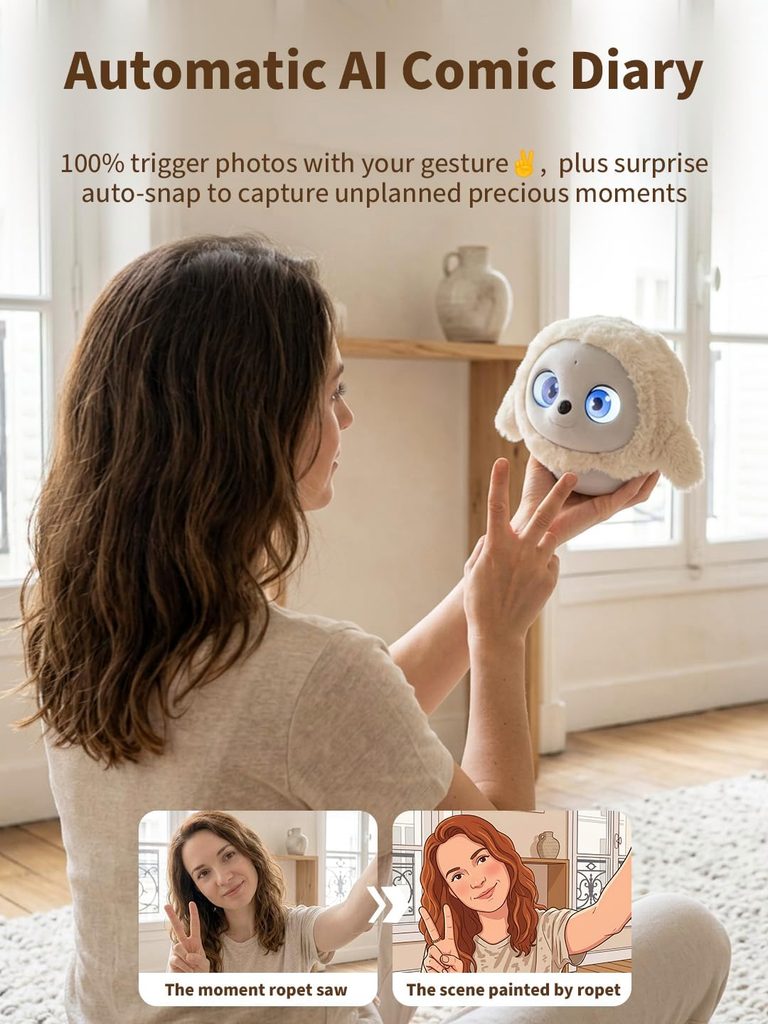
Ropet is also designed to be physically interactive.
You can pet it, wake it up, shake it, turn it upside down, make hand gestures, or use voice commands to trigger different reactions.
It can respond to expressions and sounds as well.
Smiling, appearing sad, making loud noises, sneezing, playing music, whistling, or even making animal sounds can produce different responses.
This makes Ropet feel much more dynamic than a companion that exists only on a screen.
You do not always have to start a conversation.
Sometimes simply touching it or making a gesture is enough to create an interaction.
That variety helps the experience feel more natural and less repetitive.
It Has Pet-Like Behaviors
Ropet also includes behaviors that make it feel more like caring for a virtual pet.
It can become sleepy, hungry, full, lonely, or even seem sick.
Different states are reflected through its reactions and expressions, and its eyes can help communicate how it is feeling. Creator brief for Youtube
These little behaviors give owners more reasons to check in on it throughout the day.
Instead of being completely passive, Ropet can create the sense that something is happening even when you are not actively asking it questions.
That makes the relationship feel more continuous.
Ropet Creates a Daily Diary
One of the most unique features is Ropet’s Diary.
Ropet can create a daily diary based on the interactions and emotional moments that happened throughout the day.
The diary is generated overnight and can be viewed the next day through the app. Creator brief for Youtube
That turns everyday interactions into small memories.
Instead of conversations disappearing the moment they are over, Ropet can create a record of the day from its own perspective.
The diary is designed to reflect interactions, notice emotions and behaviors, and even gently suggest something for the following day. Creator brief for Youtube
It is a clever way to make the experience feel like it has continuity instead of starting fresh every time you turn the device on.
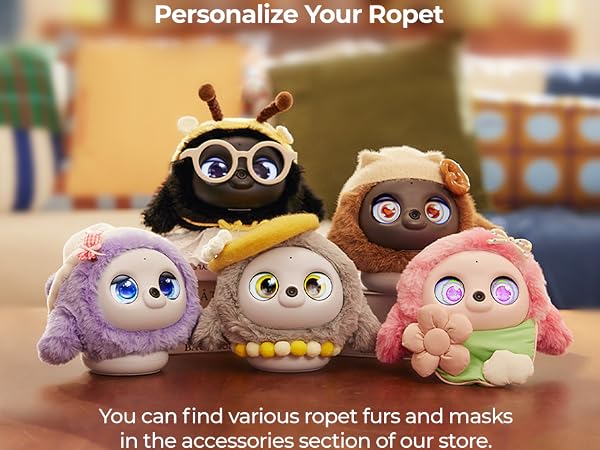
You Can Customize How Ropet Looks
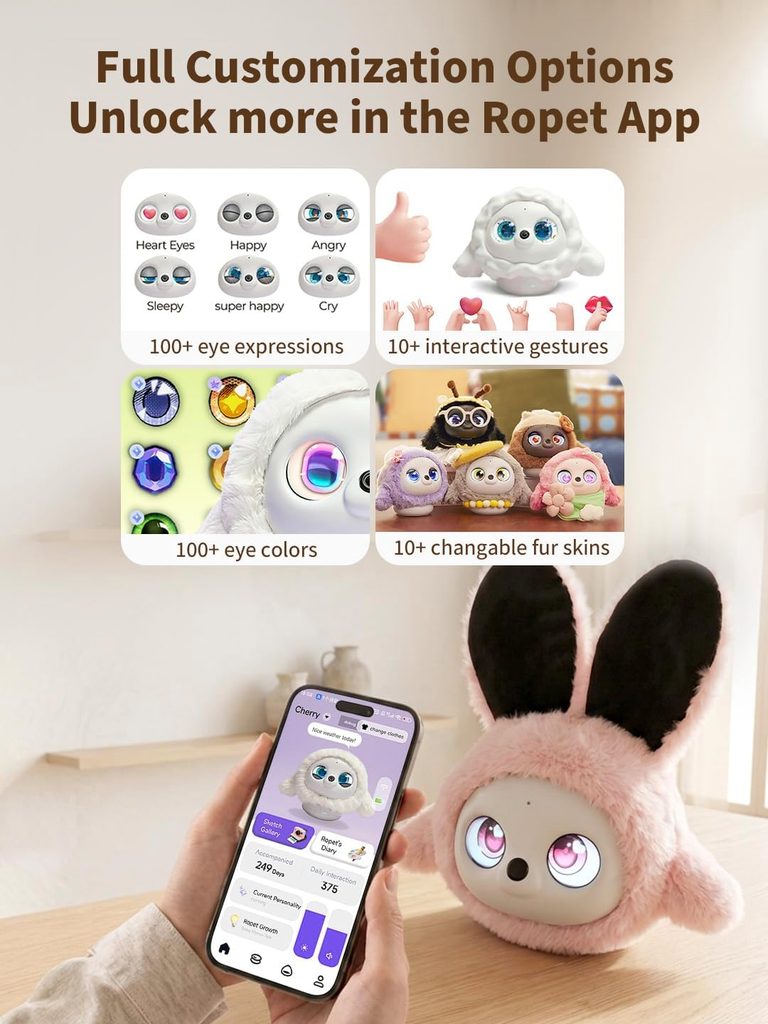
Ropet is also highly customizable.
Owners can change its fur, mask, and eye color, helping make the physical companion feel more personal. Creator brief for Youtube
There is also a Sketch Gallery where you can participate in drawing activities with Ropet, adding another interactive element beyond conversation. Creator brief for Youtube
For people who enjoy customizing their devices, collectibles, or digital avatars, this gives Ropet another layer of personality.
Privacy Is Built Into the Experience
Because AI companions are designed to spend time inside the home, privacy is an important consideration.
Ropet can be used offline, with AI models running on-device and data processed locally. Creator brief for Youtube
That is especially relevant for a device designed around frequent interaction and conversation.
Why Ropet Shows Where AI Companions Are Going
What makes Ropet interesting is not one individual feature.
It is the way everything works together.
Conversation, expressive eyes, face recognition, personality development, touch responses, gestures, customizable appearance, pet-like behaviors, and daily memories all help create the feeling that there is more going on than simply using a gadget.
That is also why AI companions are becoming more popular.
People are no longer only interested in what AI can do for them. They are starting to explore what it feels like to interact with AI in a more personal, playful, and ongoing way.
Ropet is a good example of that shift.
It may catch someone’s attention because it looks cute, but the deeper appeal is the way it can gradually become part of everyday life through repeated interaction, personality, and shared moments.