Jigsaw puzzles feel like a timeless pastime, something that has always existed in living rooms, classrooms, and cozy weekend traditions. Today, solving jigsaw puzzles is considered both a hobby and a mindfulness exercise that offers a break from constant digital stimulation. But the history behind jigsaw puzzles is far more fascinating than most people realize. Their origin stretches back more than 250 years, and their cultural journey from an educational tool used by royalty to a worldwide mental-wellness phenomenon is unlike anything else in the history of games and recreation.

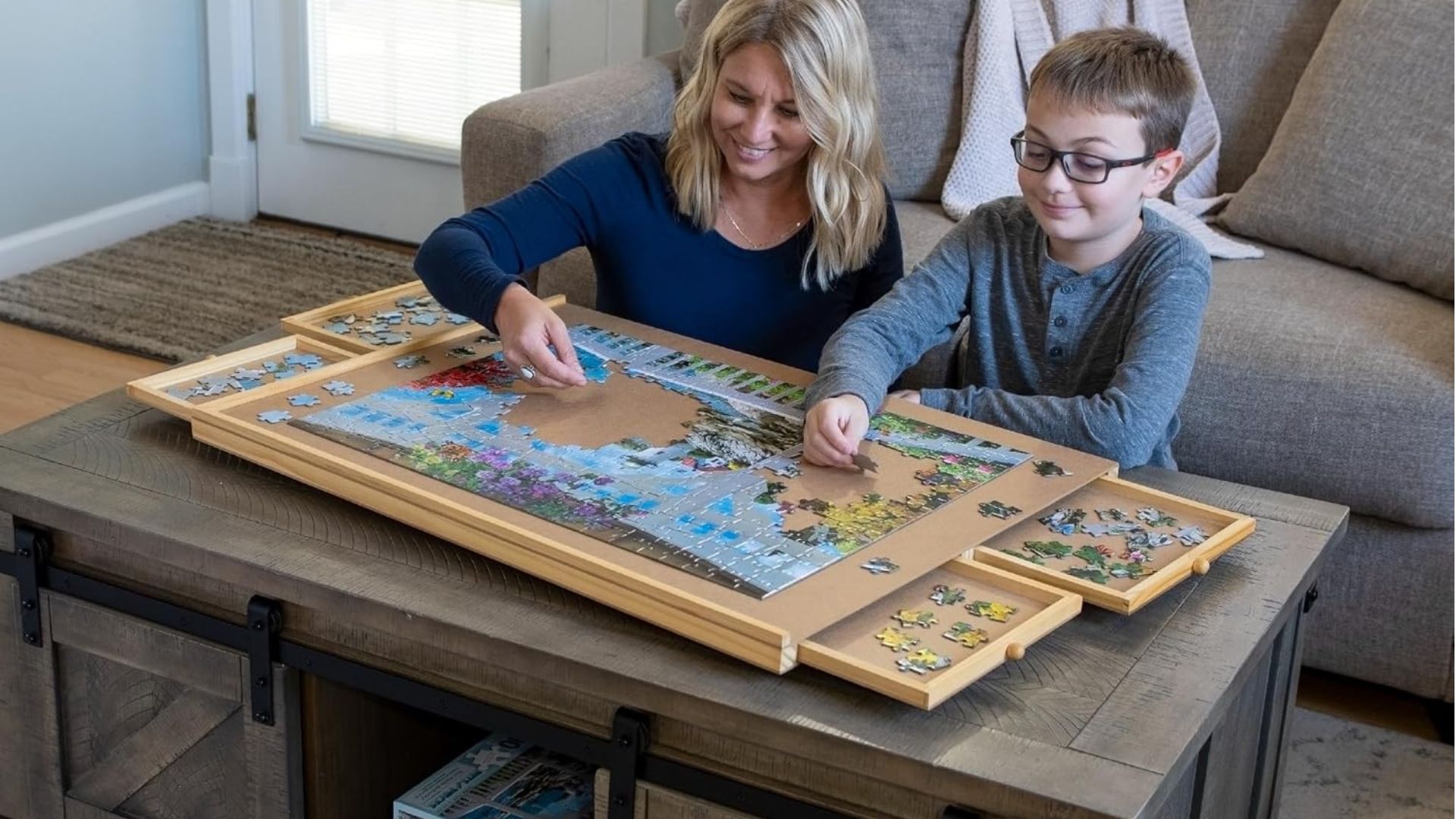
Jigsaw puzzles have survived and thrived through global wars, economic collapses, and technological revolutions. They have never disappeared, and instead have evolved dramatically, becoming a modern obsession enjoyed by millions of people around the world. Nearly every generation has rediscovered puzzles in its own way. What started as a simple classroom resource has transformed into a booming category of premium puzzle brands, complex wooden puzzles, collectible artwork puzzles, 3D models, and puzzle accessories such as sorting trays, storage systems, and large puzzle boards with pull-out drawers that make puzzling more enjoyable and efficient.
To understand why jigsaw puzzles continue to captivate minds after centuries of change, it helps to look back at where they began.
The Unexpected Origin of the First Jigsaw Puzzle
The first jigsaw puzzle was created in the 1760s by John Spilsbury, a London cartographer and engraver. Spilsbury mounted a printed world map onto a thin sheet of wood and carefully cut around each country with a fine-toothed saw, creating an educational game designed to teach children geography. Students were tasked with reassembling the map by placing each country in the correct location.
These early puzzles were not designed for amusement. They served a very practical purpose: helping children understand the world through tactile learning. Because the cutting process involved a small handheld tool called a jigsaw, the pieces became known as jigsaw puzzles.
Puzzles quickly spread throughout the aristocracy, especially among wealthy European families who valued education. In these early years, puzzles were made entirely of wood and produced by hand, making them rare and expensive. For nearly 100 years, only the upper class could afford them.

The Expansion of Puzzles in the 1800s
Throughout the 19th century, interest in puzzles grew dramatically. Publishers realized the commercial potential, and puzzle designs expanded from geography to historical scenes, artwork, landscapes, and alphabets. By the late 1800s, jigsaw puzzles began to appear for adults as well, offering more complexity and higher piece counts.
Technological advancements such as lithographic printing and better saw designs allowed puzzles to become more detailed and beautiful. However, they were still produced from wood, and because each puzzle was hand-cut, no two were identical pieces. This made puzzling more challenging, but also made puzzles expensive luxury items.
At this time, puzzles still did not feature interlocking pieces. Instead, pieces simply sat next to each other and could easily slide apart, which made solving them even more difficult and required a flat, stationary surface.

The Puzzle Boom During the Great Depression
Surprisingly, one of the most important eras in the history of jigsaw puzzles was the 1930s during the Great Depression. As unemployment grew and disposable income vanished, people desperately searched for affordable ways to find comfort, distraction, and entertainment at home. Jigsaw puzzles suddenly became one of the most popular forms of recreation, offering an escape from financial stress for just a few cents.
During this time, puzzles experienced their first large-scale mass manufacturing shift. Instead of wood, they were printed on cardboard and cut using die-cut stamping machines. This dramatically reduced the cost and made puzzles widely accessible.
Newspapers and magazines even distributed weekly puzzle releases that families could look forward to as a shared activity. Puzzle swapping became common, with neighbors trading puzzles the same way people exchange books today.
In one extraordinary year, the United States sold more than 10 million puzzles. At a moment when the world was struggling, puzzles provided a sense of accomplishment and control that many people could not find elsewhere.

The Rise of Modern Puzzle Culture
Through the 1950s and beyond, puzzles became a household staple. They evolved into a bonding activity for families, a calming pastime for seniors, and an enjoyable challenge for hobbyists of all ages. Companies expanded themes to include animals, cities, movie posters, famous artwork, and photographic nature scenes.
Puzzle complexity increased dramatically. Manufacturers experimented with larger piece counts, unique piece shapes, double-sided puzzles, and eventually 3D puzzles. By the 1980s and 1990s, jigsaw puzzles had become a widely recognized hobby and a beloved gift category.
Then, something remarkable happened in the early 2020s. Jigsaw puzzles experienced a massive cultural resurgence.
The Puzzle Renaissance: Why Puzzles Became a Modern Obsession
The modern puzzle boom accelerated as people sought meaningful offline activities to reduce stress, improve focus, and disconnect from constant technology. Puzzles offered something digital entertainment could not provide: a slow, peaceful, tangible accomplishment that engaged the brain without overwhelming it.
Psychologists now recommend jigsaw puzzle solving for improving cognitive function, memory, and concentration. Research shows that puzzles:
- Improve short-term memory
- Boost problem-solving ability
- Strengthen visual-spatial reasoning
- Reduce cortisol and stress
- Encourage mindfulness and patience
- Support healthy aging and brain resilience
For many people, puzzles became a form of therapy and escape from overstimulation. There is a deep emotional satisfaction that comes from watching a picture emerge piece by piece through personal effort and time.
Communities of puzzle lovers have grown rapidly online, sharing progress photos, favorite puzzle brands, and tips for solving difficult puzzles. Many artists now design puzzles as functional art pieces intended for framing and display.
Puzzles are more than a pastime. They have become part of modern wellness culture.

The Evolution of Puzzle Accessories
As puzzles have grown in complexity and popularity, the tools used to complete them have evolved as well. Traditional puzzles were once done directly on dining tables or floors, which created challenges such as losing pieces, needing to constantly clean up, or being unable to pause progress.