Toaster ovens have quietly become one of the most used appliances in the kitchen. They preheat faster than a traditional oven, save energy, and are perfect for everything from
reheating leftovers
to
baking small meals.
For years, many households have relied on the same compact countertop unit without giving it much thought.
But here is the honest question most people do not ask themselves.
Is your old toaster oven actually doing its job well anymore?
If you have noticed uneven cooking, longer cook times, inconsistent temperatures, or simply limited functionality, it may not be your recipe. It may be your appliance.
Kitchen technology has evolved dramatically in recent years, and the modern
air fryer toaster oven
is a very different machine from the basic toaster oven many of us bought a decade ago.
Here are some common signs it may be time for an upgrade.

NuWave
Your Food Is Not Cooking Evenly
One of the most frustrating problems with older toaster ovens is uneven heat distribution. You put in a tray of vegetables and half are perfectly roasted while the others are pale and underdone.
You reheat pizza and one side is crisp while the other stays soggy.
This usually happens because older models rely on basic heating elements that cycle on and off. When the heating element shuts off, the temperature drops. When it kicks back on, it overshoots.
That constant fluctuation creates hot spots and cold spots.
Modern
convection cooking
systems are designed to eliminate this inconsistency by circulating heat evenly throughout the chamber. If you regularly rotate pans halfway through cooking to compensate for uneven heat, that is a sign your appliance is working harder than it should.
It Takes Longer Than It Used To
If your toaster oven feels slower than your microwave for basic reheating, something is off. Older units often struggle to maintain consistent high temperatures. They may say they are set to 400°F, but actual internal temperatures can swing widely.
Newer
super convection
technology cooks faster because it moves hot air continuously around the food instead of letting it sit in stagnant heat. That means quicker browning, crispier exteriors, and shorter overall cook times.
If dinner feels like it takes longer than it should, the problem may not be your schedule. It may be outdated heating technology.
You Want Crispier Results
Air fryers became popular for one simple reason. People want crispy food without deep frying.
Many older toaster ovens claim to toast or bake, but they cannot replicate the powerful air circulation needed for true crisping.
Frozen fries come out soft. Chicken skin never fully browns. Reheated leftovers lose their texture.
Modern
air fryer oven
designs are specifically engineered to solve that problem by increasing air speed and improving heat distribution. The result is food that cooks more evenly and develops better texture.

NuWave
You Are Running Out of Space
Traditional toaster ovens are often small and shallow. They work fine for toast or a single tray of cookies, but they struggle with larger meals.
If you find yourself turning on your full-size oven just to cook one family dinner because your toaster oven cannot handle the capacity, that defeats the energy-saving purpose of having one in the first place.
Larger capacity
countertop convection ovens
are designed to function as true secondary ovens. That means you can bake, roast, broil, or air fry for a family without heating your entire kitchen.
You Are Managing Temperature Guesswork
Many older toaster ovens rely on dials with limited precision. You turn it somewhere between 375°F and 400°F and hope for the best. Internal temperature consistency is rarely exact.
If you enjoy cooking proteins like steak, chicken, or fish, guessing internal doneness becomes a gamble. Either you cut into it repeatedly to check or risk overcooking.
Modern countertop ovens now offer
digital temperature controls
and integrated monitoring that eliminates that guesswork entirely.
You Want More Than Just Toast
The role of the toaster oven has expanded. It is no longer just a bread-toasting box. People use it for baking, air frying, reheating, roasting vegetables, cooking proteins, and even dehydrating foods.
If your current appliance only offers a handful of preset functions and limited control, you are missing out on versatility that newer models provide.
That brings us to what a true modern upgrade looks like.
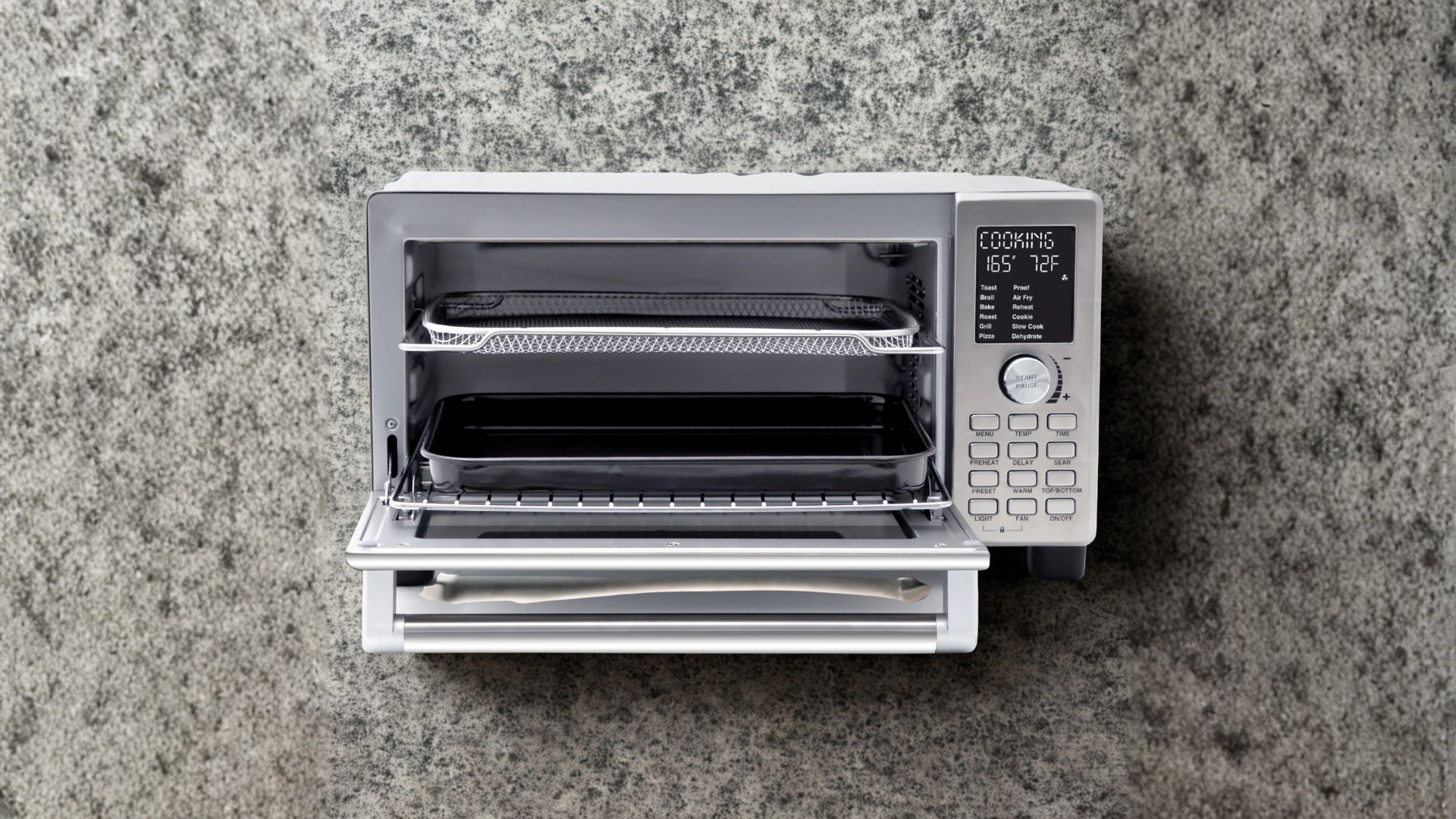
A Modern Upgrade: The NuWave Bravo XL Pro Air Fryer Toaster Oven
If the issues above sound familiar, there are appliances designed specifically to address them. One example is the
NuWave Bravo XL Pro Air Fryer Toaster Oven,
a 30-quart stainless steel countertop oven built to replace multiple kitchen appliances at once.
This is not a basic toaster oven with an air fryer button added on. It is engineered around improved convection performance, precision temperature control, and customizable heat zones.
Here is how it answers many of the frustrations people experience with older toaster ovens.

NuWave
Improved 100 Percent Super Convection for Faster, Crispier Results
One of the standout upgrades is its improved 100 percent super convection system. Instead of relying on passive heat, it uses powerful air circulation to cook food more evenly and more quickly.
That means crispier fries, better browning on roasted vegetables, and more evenly cooked proteins. Because hot air is continuously circulating, you get consistent surface texture without needing to constantly rotate trays.
For anyone frustrated by soggy reheats or uneven crisping, this can feel like a major upgrade in everyday cooking.
Make Adjustments On the Fly
Older ovens lock you into the settings you choose at the beginning of the cooking process. If you realize something needs more heat or extra time, adjustments can be awkward or imprecise.
With the Bravo XL Pro, you can fine-tune time and temperature any time during the cook. Want hotter temperature or need to cook it longer. Simply adjust on the fly without restarting your cycle. The intuitive digital controls are easy to operate, which makes this flexibility feel practical, not complicated.

NuWave
Intuitive Digital Controls with Precision Temperature Range
The temperature range spans from 50°F to 500°F, adjustable in precise 5°F increments. That level of precision matters more than most people realize.
Unlike primitive methods that regulate temperature by turning the heater on and off, the Bravo’s heater is designed to keep cooking without constant shutoffs, helping maintain a more stable cooking environment. For everything from low temperature warming to high heat baking, the ability to dial in exact settings helps you cook with more confidence.
Linear Thermal Technology for Consistent Heat
Temperature fluctuation is one of the biggest weaknesses of older countertop ovens. The Bravo uses Linear Thermal technology, which continuously monitors temperature fluctuations and makes constant adjustments every second to maintain the set temperature.
That stability improves baking results, reduces the chance of uneven browning, and supports more reliable outcomes across recipes that require consistent heat.
Dual Heat Zones for True Surround Cooking
Traditional toaster ovens heat from the top and bottom in fixed ways. The Bravo XL Pro lets you customize the top heaters, bottom heaters, and convection fan independently for true surround cooking.
If you are baking pizza, for example, you can run the bottom heaters at full power for a crisp crust while setting the top heaters lower to help melt and brown toppings more evenly without overdoing them.
Integrated Smart Digital Thermometer
Cooking proteins to the correct internal temperature can be stressful. Overcook and the food dries out. Undercook and you risk safety issues.
The integrated smart digital thermometer helps remove that guesswork. Once you set the desired doneness temperature, the oven monitors the internal temperature of your food and automatically ends the cooking process when the target temperature is reached.

NuWave
Multi-Layer Even Cooking in a 30 Quart Capacity
With its 30-quart capacity, you can cook on multiple racks at once. Combined with the convection system, this supports multi-layer even cooking so you can roast vegetables on one rack while cooking protein on another without dramatically affecting results.

NuWave
PFAS Free Construction
For households increasingly aware of materials and coatings used in cookware and appliances, the
PFAS free
design adds peace of mind.
As more consumers look for safer kitchen materials, this becomes a meaningful feature rather than just a technical detail.
A True Countertop Oven Replacement
The biggest difference between older toaster ovens and modern air fryer toaster ovens like this one is scope. Instead of being a secondary appliance used occasionally, it becomes a primary cooking tool.
It can bake, air fry, broil, roast, toast, and more, all with precision and speed that older models often cannot match.
If you find yourself turning on your full-size oven for simple weeknight dinners, a high-capacity
convection toaster oven
can reduce energy use and keep your kitchen cooler.

NuWave
Final Thoughts
Upgrading a toaster oven may not seem like a dramatic kitchen decision, but when you consider how often it gets used, it can have a meaningful impact on daily cooking.
If your current model struggles with uneven heat, slow cook times, limited capacity, and imprecise controls, it may simply be outdated technology.
Modern countertop ovens like the
NuWave Bravo XL Pro
address those problems directly through improved convection, precision digital controls, dual heat customization, and integrated temperature monitoring.
Sometimes upgrading is not about buying something new for the sake of it. It is about solving everyday frustrations you have slowly accepted.
And if your old toaster oven has been quietly underperforming for years, it may be time to replace it with something designed for how people actually cook today.