

Keeping a family organized can feel like a full-time job. Between school schedules, work, appointments, sports, chores, meals, homework, errands, and weekend plans, it is easy for things to slip through the cracks. One person forgets practice. Another forgets to take out the trash. Dinner plans fall apart. Someone asks, “What are we doing today?” for the third time.
The good news is that family organization does not have to be complicated. You do not need a perfect system or a home that looks like a magazine. You just need a few simple habits that help everyone know what is happening, what needs to be done, and where things belong.
Here are simple ways to keep your family more organized without making daily life feel harder.
1. Create One Central Place for the Family Schedule
One of the easiest ways to reduce chaos is to keep the family schedule in one shared place. When plans are scattered across phones, paper notes, school emails, texts, and memory, something will eventually get missed.
A central schedule helps everyone see the week at a glance. This can include school events, work schedules, appointments, sports practices, activities, birthdays, deadlines, and family plans.
The key is choosing one place where everyone knows to look. When the schedule is visible and easy to check, there are fewer last-minute surprises.
2. Use a Digital Calendar for the Whole Household
A digital calendar can make family organization much easier, especially for busy households. Instead of relying on sticky notes, random reminders, or one person’s memory, a digital calendar gives the family a shared hub for schedules, chores, meal planning, and reminders.
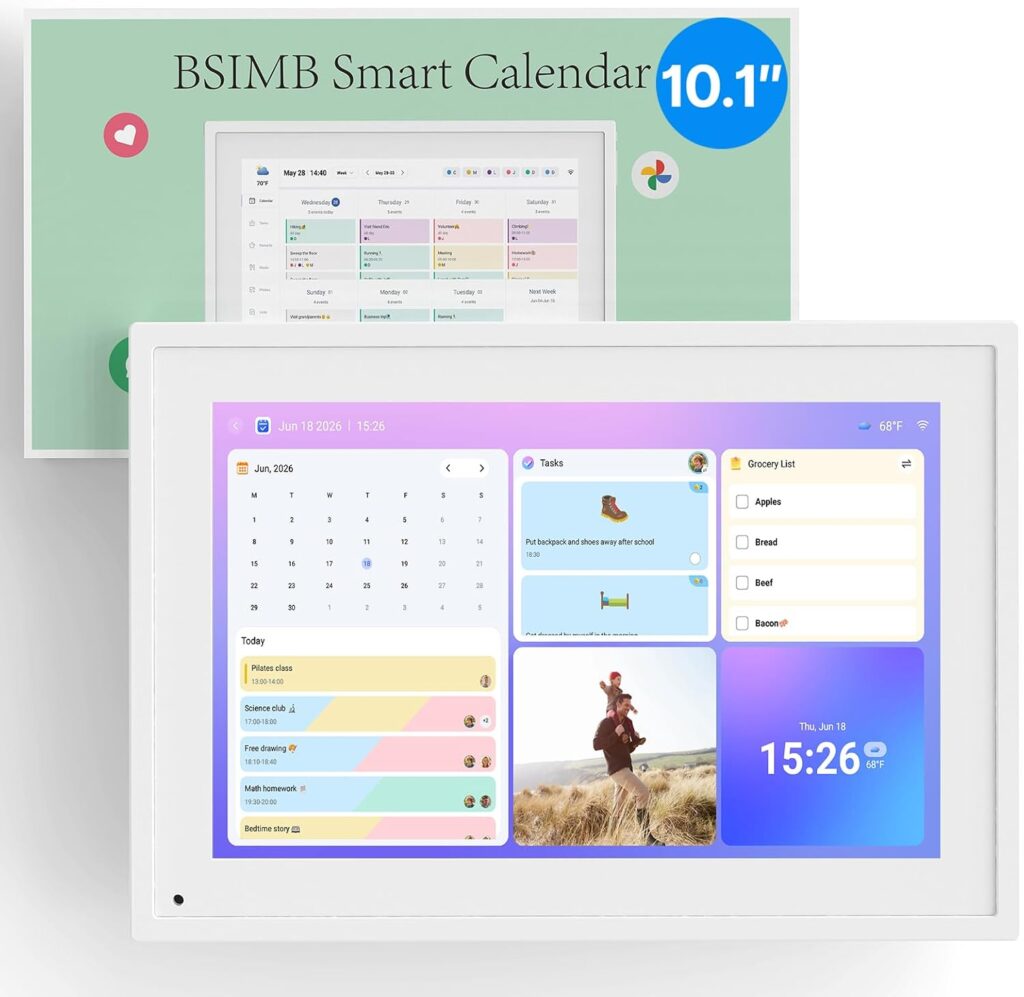
A brand like BSIMB is worth considering for families who want a more modern way to keep everyone on the same page. A digital calendar can be especially helpful because it is visual, easy to update, and simple for different family members to check throughout the day.
This kind of setup works well in a kitchen, hallway, entry area, or family command center. It can help kids see their chores, parents track appointments, and everyone understand what is happening that week. For families that feel like they are always juggling too much, a digital calendar can make the routine feel more manageable.
3. Build a Simple Family Command Center
A family command center does not need to be fancy. It is just a dedicated area where important family information and everyday items live.
This could be a wall in the kitchen, a small section near the entryway, or a corner with a calendar, mail tray, hooks, and a small organizer. The goal is to stop important things from getting lost around the house.
A good command center might include the family calendar, school papers, permission slips, keys, backpacks, lunch boxes, mail, and weekly reminders. When everything has a place, mornings and evenings become less stressful.
The best command center is one your family will actually use. Keep it simple, visible, and easy to maintain.
4. Make Chores Clear and Specific
Chores can become frustrating when no one knows who is responsible for what. Instead of saying, “Everyone needs to help more,” make the tasks clear.
Assign specific chores to specific people. For example, one child takes out the trash, another loads the dishwasher, someone feeds the pet, and someone wipes the table after dinner. Clear tasks prevent confusion and make it easier to hold everyone accountable.
It also helps to keep chores age-appropriate. Younger kids can handle simple tasks like putting toys away, matching socks, or feeding pets with supervision. Older kids can help with dishes, laundry, sweeping, trash, and meal prep.
When chores are visible on a chart or calendar, they become part of the routine instead of a daily argument.
5. Plan Meals Before the Week Gets Busy
Meal planning is one of the biggest organization wins for families. You do not need a complicated meal plan. Even choosing three or four dinners ahead of time can make the week easier.
Start by looking at the schedule. If Tuesday is packed with activities, that should be a simple dinner night. If Sunday is slower, that might be a good day to prep ingredients or cook something that creates leftovers.
A basic meal plan can help with grocery shopping, reduce last-minute takeout, and make evenings feel less rushed. You can also keep a running list of easy family meals so you are not starting from scratch every week.
Simple meals count. Tacos, pasta, sandwiches, breakfast for dinner, sheet pan meals, leftovers, and slow cooker meals can all be part of an organized routine.
6. Make Packed Lunches Easier to Organize
Lunch packing is one of those daily tasks that can either feel simple or turn into a rushed morning problem. Having the right containers ready can make it much easier to prep lunches ahead of time, portion snacks, and keep different foods separated.
A bento-style lunch box can be especially helpful for families because it gives each food its own place. The Amathley Bento Box Adult Lunch Box Kids is one option to consider for school lunches, work lunches, toddler meals, or snacks on the go. It has five compartments, sauce containers, and a blue design that works for adults, kids, and toddlers.
It is also microwave, dishwasher, and freezer safe, which makes it more practical for everyday use. Since it is BPA-free, it can be a useful addition to a family meal-prep routine. Instead of packing several separate bags or containers, one organized lunch box can help keep meals neater and make mornings feel less chaotic.
7. Create Morning and Evening Routines
A lot of family stress happens during transitions. Mornings are rushed. Evenings are tired. People forget things when there is no routine.
A simple morning routine might include getting dressed, brushing teeth, packing lunches, checking backpacks, and reviewing the day’s schedule. An evening routine might include preparing clothes, packing bags, cleaning up the kitchen, setting out lunch items, and checking tomorrow’s calendar.
The goal is to reduce decision-making. When the routine is familiar, everyone knows what comes next.
Routines do not have to be strict. They just need to be consistent enough that the household runs smoother.
8. Give Everyday Items a Home
A family home gets messy fast when everyday items do not have a clear place. Shoes end up by the door. Backpacks land on the floor. Mail piles up on the counter. Chargers disappear. Keys go missing.
The fix is simple: give commonly used items a home.
Use hooks for backpacks and jackets. Use a basket for shoes. Use a tray for keys and wallets. Use a bin for school papers. Use a charging station for devices. Use labeled containers for small items that always seem to disappear.
When everything has a place, cleanup gets faster and everyone knows where to find what they need.
9. Do a Quick Daily Reset
A daily reset can keep small messes from turning into big weekend cleaning projects. This does not need to take long. Even 10 to 15 minutes can make a difference.
Choose a time that works for your family, such as after dinner or before bed. Have everyone help put away shoes, clear counters, load dishes, pick up toys, check backpacks, and reset the main living areas.
This habit works because it keeps the house from getting too far out of control. It also teaches kids that organization is not one person’s job.
A short reset done consistently is better than waiting until everything feels overwhelming.
10. Keep a Running List for Groceries and Supplies
Families run out of things constantly: milk, snacks, paper towels, toothpaste, shampoo, school supplies, pet food, batteries, and cleaning products. A running list helps prevent last-minute store runs.
Keep the list somewhere easy to update. This could be on a phone app, a whiteboard, a digital calendar, or a notepad near the kitchen. When someone uses the last of something, they add it to the list.
This works best when everyone participates. Instead of one person trying to remember everything, the whole family helps track what needs to be replaced.
11. Keep the System Easy to Follow
The best organization system is not the most complicated one. It is the one your family can keep using.
If a system has too many steps, people will stop following it. If the chore chart is confusing, it will get ignored. If the calendar is hard to update, it will fall behind. If storage bins are too specific, things will end up in the wrong place anyway.
Keep the system simple. Use clear categories. Put things where people naturally use them. Make the calendar easy to read. Keep routines realistic.
Family organization should make life easier, not create another project to manage.
Final Thoughts
Keeping your family organized does not require a perfect home or a complicated routine. Small systems can make a big difference when they are easy to see, easy to use, and easy to repeat.
Start with one central schedule, clear chores, simple meal planning, morning and evening routines, and a place for everyday items. A digital calendar from a brand like BSIMB can also help bring schedules, chores, meals, and reminders into one shared family hub.
The goal is not to control every minute of the day. It is to help everyone feel more prepared, less rushed, and more on the same page. When the basics are organized, family life feels a lot easier to manage.